
Acebuche de las Hoyas Trail
- Interpretive Panel 3 -
ANCIENT WILD OLIVE TREE TRAIL
Acebuche de las Hoyas
Did you know...?
In this ancient landscape, olive oil is more than just a product: it represents memory, identity and commitment. The Sierra de Cazorla Protected Designation of Origin ensures that every olive tree is cultivated with care, following sustainable practices that protect the soil, water and biodiversity.
The result is an exceptional extra virgin olive oil, officially recognised and protected, carrying the essence of this land in every drop.
The wild olive tree: the ancestor of the cultivated olive
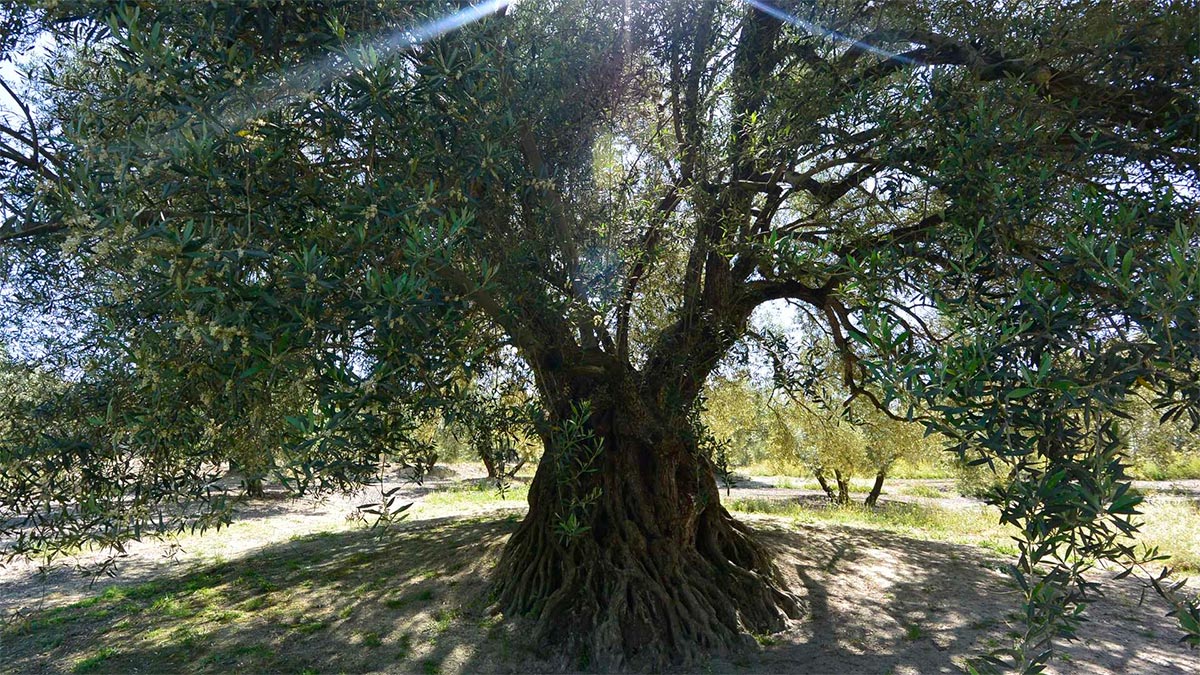
The wild olive tree is the wild ancestor of the cultivated olive tree. Present on the Iberian Peninsula for thousands of years, it was domesticated by the earliest Mediterranean civilisations, giving rise to olive cultivation and olive-oil culture.
It can be recognised by its smaller leaves, thorns and fruits, known as wild olives, which are smaller and less fleshy. Although they produce less oil, it is highly aromatic and valuable.
In this area, the wild olive trees —some of them thousands of years old— are genuine natural monuments. Their conservation requires special care, respecting their slow growth and their considerable ecological and cultural value.
Caring for the olive grove throughout the year
Olive cultivation requires constant attention:
- Winter
Pruning to encourage growth. - Spring
Flowering and the first soil-care tasks. - Summer
Tree monitoring and water management. - Autumn-winter
Olive harvesting.
Wild olive trees require even more careful treatment, with priority given to preserving them as natural heritage.
Olive varieties: Picual and Royal
The olive-growing landscape of these mountains combines several varieties:
- Picual:
The most widespread variety in the province of Jaén. It produces intense, full-bodied and highly stable oils that are ideal for long-term storage. - Royal:
A variety native to the Sierra de Cazorla. More delicate and scarce, it produces mild, aromatic and slightly sweet oils, highly valued for their distinctive character.
Both form part of a traditional system of cultivation protected by the Sierra de Cazorla Protected Designation of Origin, which guarantees the quality of these oils.
The olive grove as a carbon sink
A cultivated forest that not only produces olive oil, but also preserves life.
The olive grove is also an ally in the fight against climate change. Olive trees absorb CO₂ and help maintain environmental balance.
This landscape functions as a genuine ecosystem supporting numerous species, including griffon vultures and small insect-eating birds, reptiles, pollinating insects and soil-dwelling wildlife.
The stream follows the route and creates a valuable wildlife corridor where birds, amphibians and small mammals thrive. Its riverside vegetation, including willows and rushes, supports rich biodiversity.
The olive grove produces more than olive oil. It also:
- Absorbs CO₂.
- Helps slow climate change.
- Preserves biodiversity.
Did you know...?
The wild olive tree is the wild ancestor of the cultivated olive tree.
The Royal variety is traditionally cultivated only in these mountains.
La Iruela Castle has watched over this landscape for centuries and formed part of ancient historic routes.